How to winterize a lawn mower
Fuel, carburetor, oil and blade before it sits for five months
Updated August 9, 2026
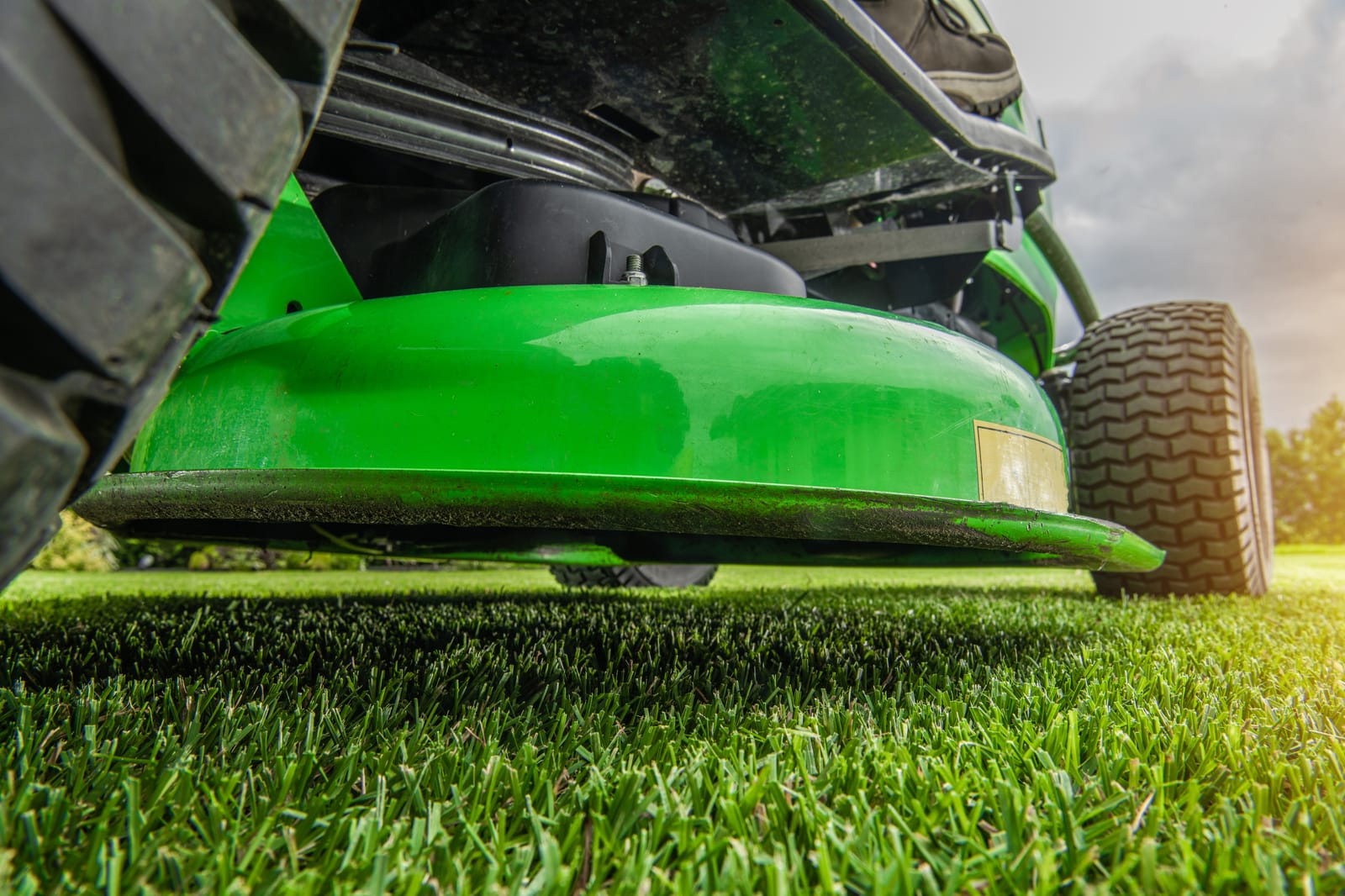
Most mowers that won't start in April didn't break over the winter. They were put away wet, in a manner of speaking: half a tank of pump gas, a season of clippings packed under the deck, and oil full of everything the engine ate since May. An hour in the fall is the difference between one pull in spring and a $90 shop bill for a carburetor clean.
Budget an hour, plus about $20 in oil, fuel stabilizer and a spark plug.
Before anything else, pull the spark plug wire off the plug. Every step below involves either the blade or the engine, and a mower that can't spark can't start while your hand is under the deck.
What you'll need
Tools
- Socket wrench and a spark plug socket (usually 13/16" or 5/8")
- Oil drain pan
- Putty knife or a stiff scraper
- Wire brush
- Work gloves. Mower blades are sharper than they look
- Block of wood, to jam the blade while you loosen the bolt
Parts and supplies
- Fuel stabilizer, or an empty tank
- Engine oil. Check the manual, but SAE 30 or 10W-30 suits most walk-behinds
- New spark plug (about $4)
- Air filter, if yours is paper and looks it
- Carburetor cleaner, and a replacement carburetor if yours is past saving
1. Deal with the fuel first
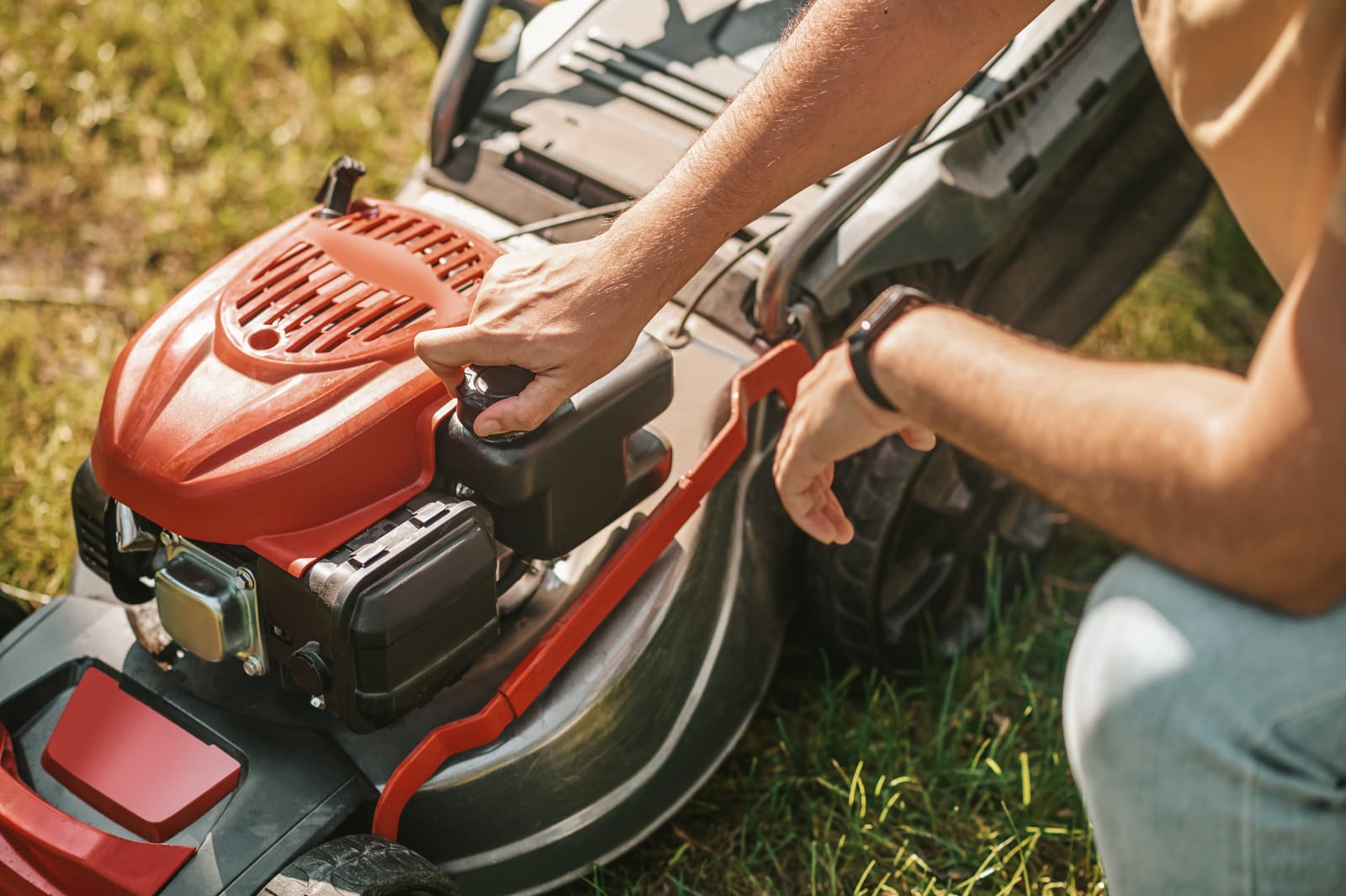
This is the step that actually causes the spring no-start, and it's the one people skip.
Pump gas is usually E10, meaning up to 10% ethanol. Ethanol pulls moisture out of the air, and after a few months a tank can separate into gas on top and a layer of water and alcohol on the bottom. That layer is what sits in your carburetor bowl and turns into the varnish that plugs the jets.
You have two honest options:
Run it dry. Shut the fuel valve if it has one, then let the engine run until it stalls. Restart it and let it stall again to clear the bowl. Nothing left to go bad.
Or stabilize it. Fill the tank most of the way, add stabilizer at the dose on the bottle, then run the engine 5 to 10 minutes so treated fuel actually reaches the carburetor. Stabilizer sitting in the tank that never got pulled through the fuel line has done nothing for the part that matters.
Pick one. What doesn't work is leaving half a tank of untreated pump gas and hoping.
If yours is a two-stroke, which covers most string trimmers and some older mowers, run it dry. Don't leave mixed fuel sitting for a season.
2. Clean the carburetor, or replace it
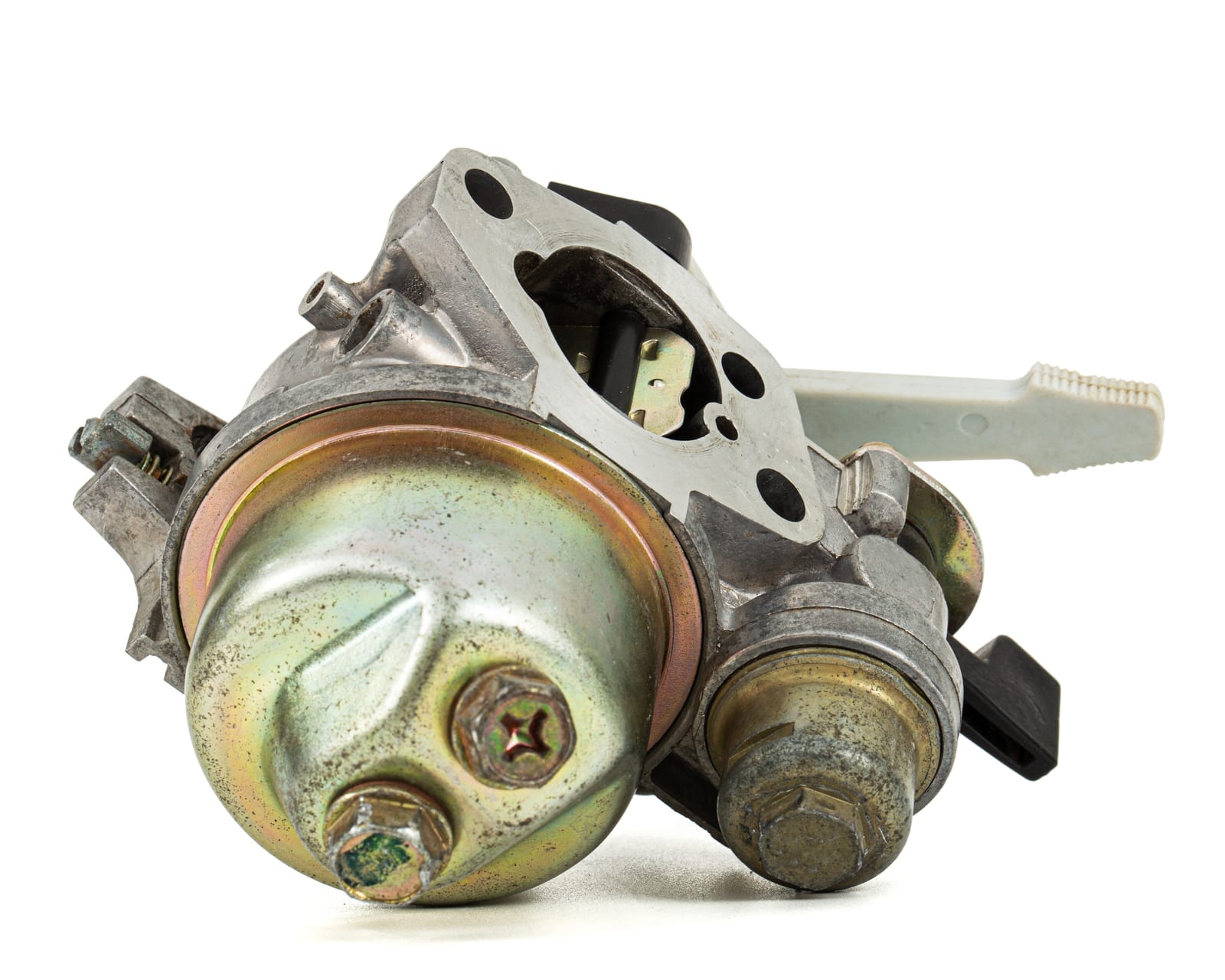
The fuel step above is about what goes into the carburetor. This step is about the carburetor itself, and it is the part that actually decides whether the mower starts in spring.
Inside the carburetor are jets: brass orifices that meter fuel, some of them narrower than a pin. Fuel left standing in the bowl over a winter evaporates and leaves a varnish behind. Varnish in a jet that size does not need to be thick to block it, and a blocked jet is a mower that turns over, coughs, and will not run. That is the $90 shop bill.
If you ran the tank dry, the bowl is close to empty already and you are mostly inspecting. If you stabilized instead, the bowl is full of treated fuel, which keeps far better than untreated fuel but is not the same as empty.
Cleaning it is an easy job, but a delicate one. Easy because on most walk-behinds the carburetor comes off with two bolts and a fuel line, and it is right there on the side of the engine. Delicate because everything inside it is small and easily ruined: a thin gasket that tears if you are rough with it, a float that bends, a needle that has to seat exactly.
Work outdoors, away from anything that could ignite fuel vapour, and drain the bowl into a container rather than onto the floor.
The short version:
- Take the bowl off and look at what is in the bottom. Clean fuel and nothing else is a good sign. Grit, a gummy brown film, or water means keep going.
- Spray carburetor cleaner through the jets and passages, then blow them through with compressed air.
- Never ream a jet with wire, a pin or a drill bit. Those holes are a measured size. Open one up and you have changed the fuel mixture permanently, and no amount of adjustment puts it back.
- Handle the float and needle gently, and replace the bowl gasket if it looks flattened or cracked.
If it is badly gummed, or the mower is old enough that parts are hard to come by, replacing the whole carburetor is often the better call. Aftermarket units for common Honda and Briggs engines run about $15 to $25, which is less than an hour of shop time and far less than a rebuild you get halfway through.
This one is worth a proper walk-through of its own, and it is on the list.
3. Change the oil while the engine is still warm
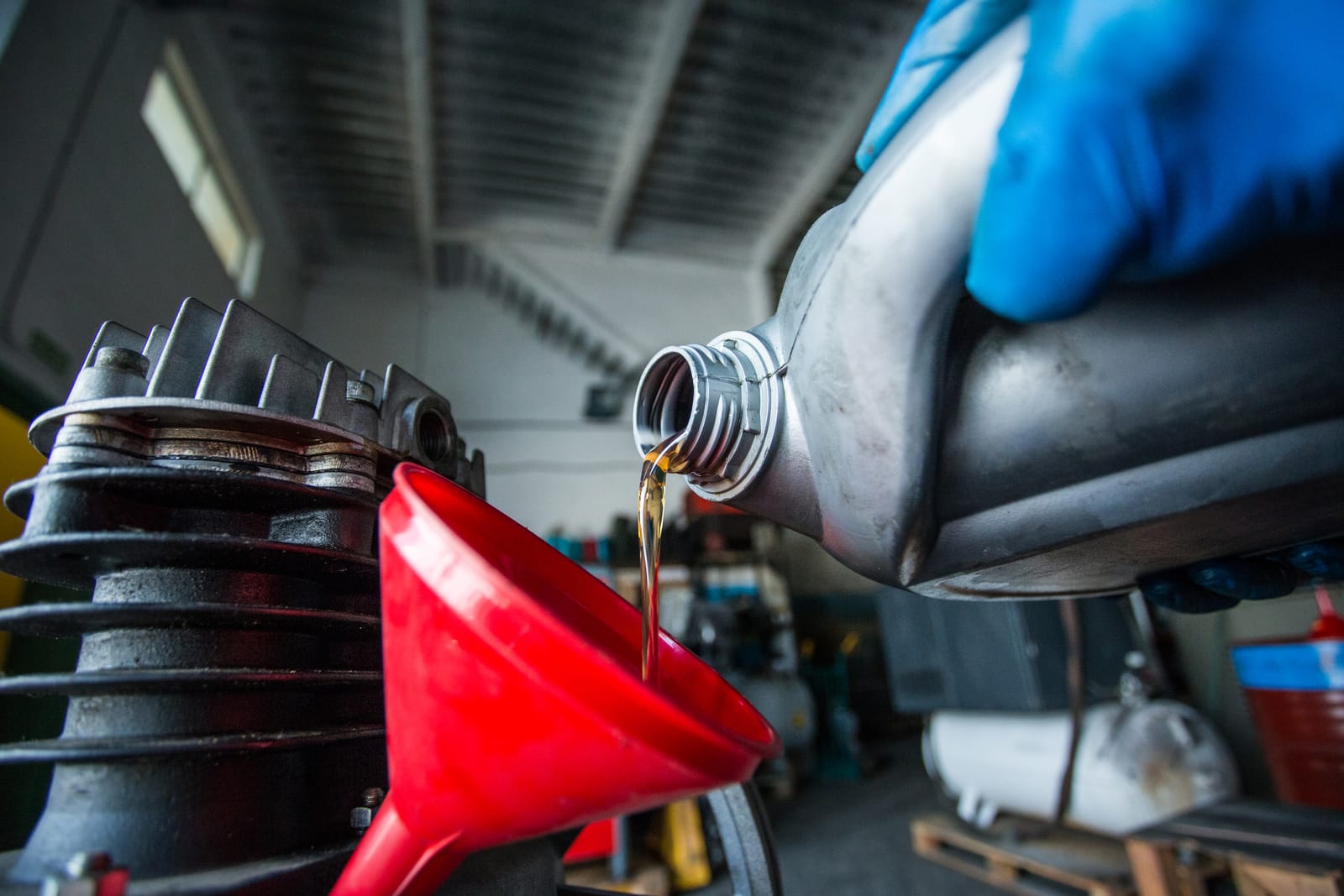
Warm oil flows out faster and carries more of the suspended grit with it. That's the whole reason to do it now rather than cold in spring.
Drain into a pan through the drain plug if there is one. If there isn't, tip the mower, and tip it the right way: air filter and carburetor pointing up. Tip it the other way and you push oil into the cylinder and soak the air filter, which buys you a smoking engine and a filter to replace.
Refill to the mark on the dipstick. Not past it. Overfilled crankcases smoke and blow oil past the seals.
Old oil goes to an auto parts store or a household hazardous waste site. Most take it free.
4. Clean the deck
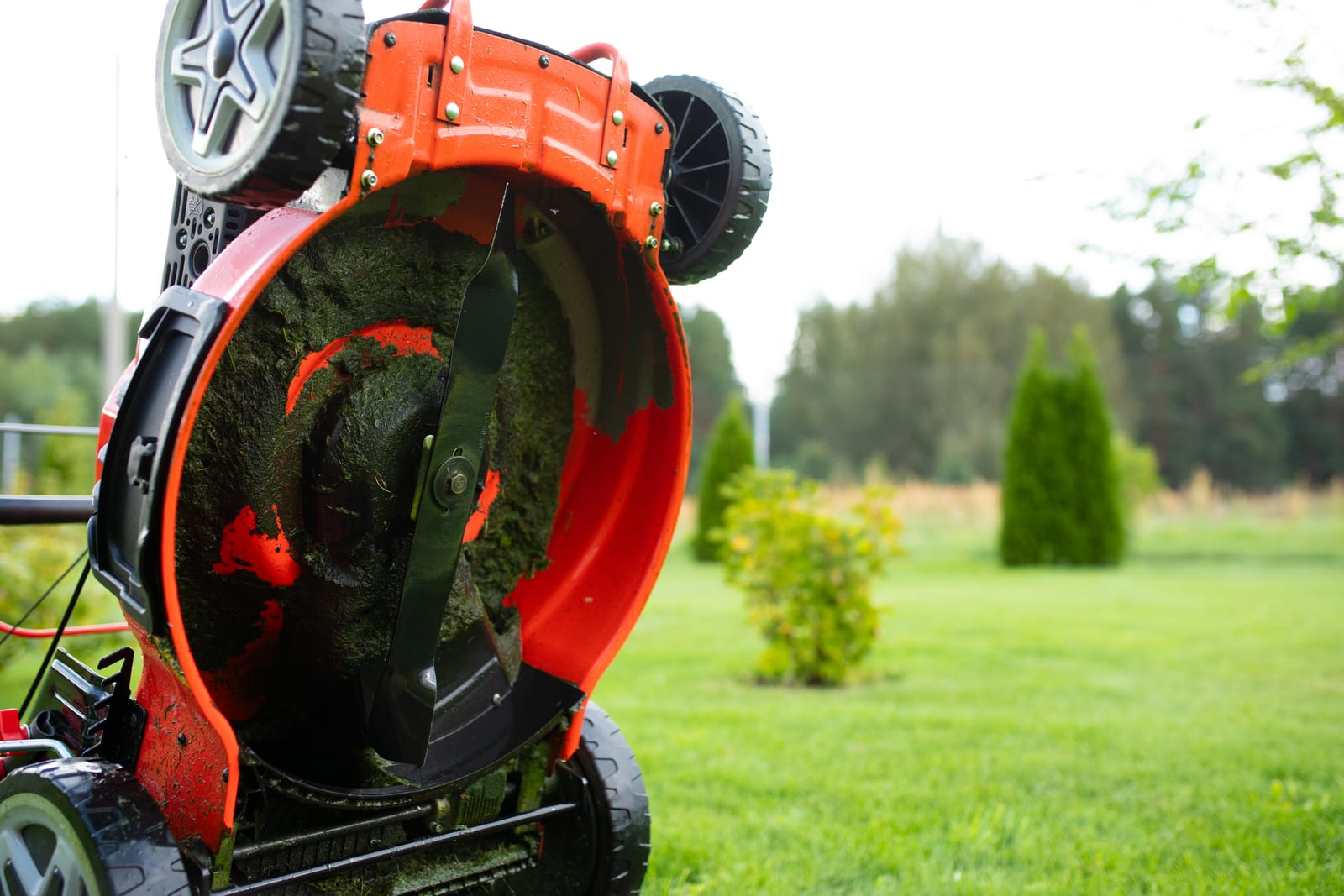
Wet clippings packed against the underside of the deck hold moisture against bare metal all winter. That's how decks rust through from the inside.
Scrape it out with a putty knife and finish with a wire brush. You want bare metal or bare paint, not a green crust. If the deck is already showing rust, this is the moment to hit it with a rust-inhibiting primer. It will never be this accessible again.
5. Blade off, sharpened or replaced
With the plug wire still off, jam a block of wood between the blade and the deck so it can't spin, then break the bolt loose. Mark which face points down before you take it off. Putting a blade back upside down is more common than you'd think, and it cuts terribly.
Sharpen at the original angle, usually about 30 degrees, and only on the cutting edge. You are not making a knife. A blade sharp enough to shave is a blade that dulls in one lawn.
Replace rather than sharpen if you find cracks anywhere, a chunk missing from the end, or a trailing edge worn thin enough to flex. Those get thrown at speed, and that's not a maintenance issue any more.
Check balance before it goes back on by hanging it on a nail through the centre hole. If one end drops, grind a little more off that end. An unbalanced blade shakes the crankshaft every second it runs.
6. Spark plug and air filter
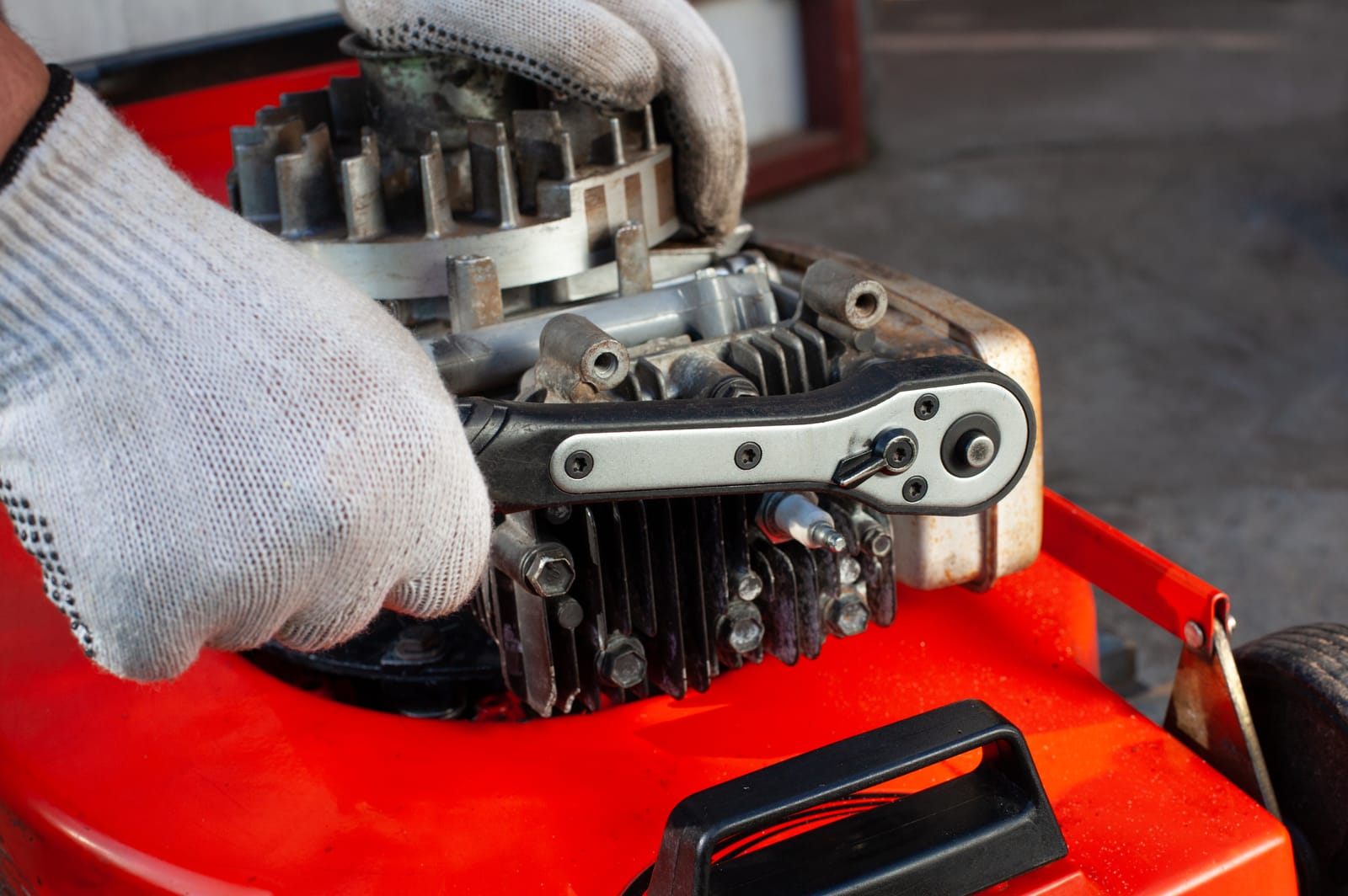
Pull the plug. A tan or light grey tip means the engine is running about right. Black and sooty means it's running rich. Oily means oil is getting somewhere it shouldn't. Either of those is worth chasing down before spring.
Plugs are a few dollars. Put a new one in, gapped to the spec in the manual, and snug it. Not gorilla-tight; you're threading steel into aluminium.

Paper air filters get replaced when they're grey. Foam ones get washed in warm soapy water, dried completely, then lightly oiled with clean engine oil and squeezed out.
7. Battery, if it has one
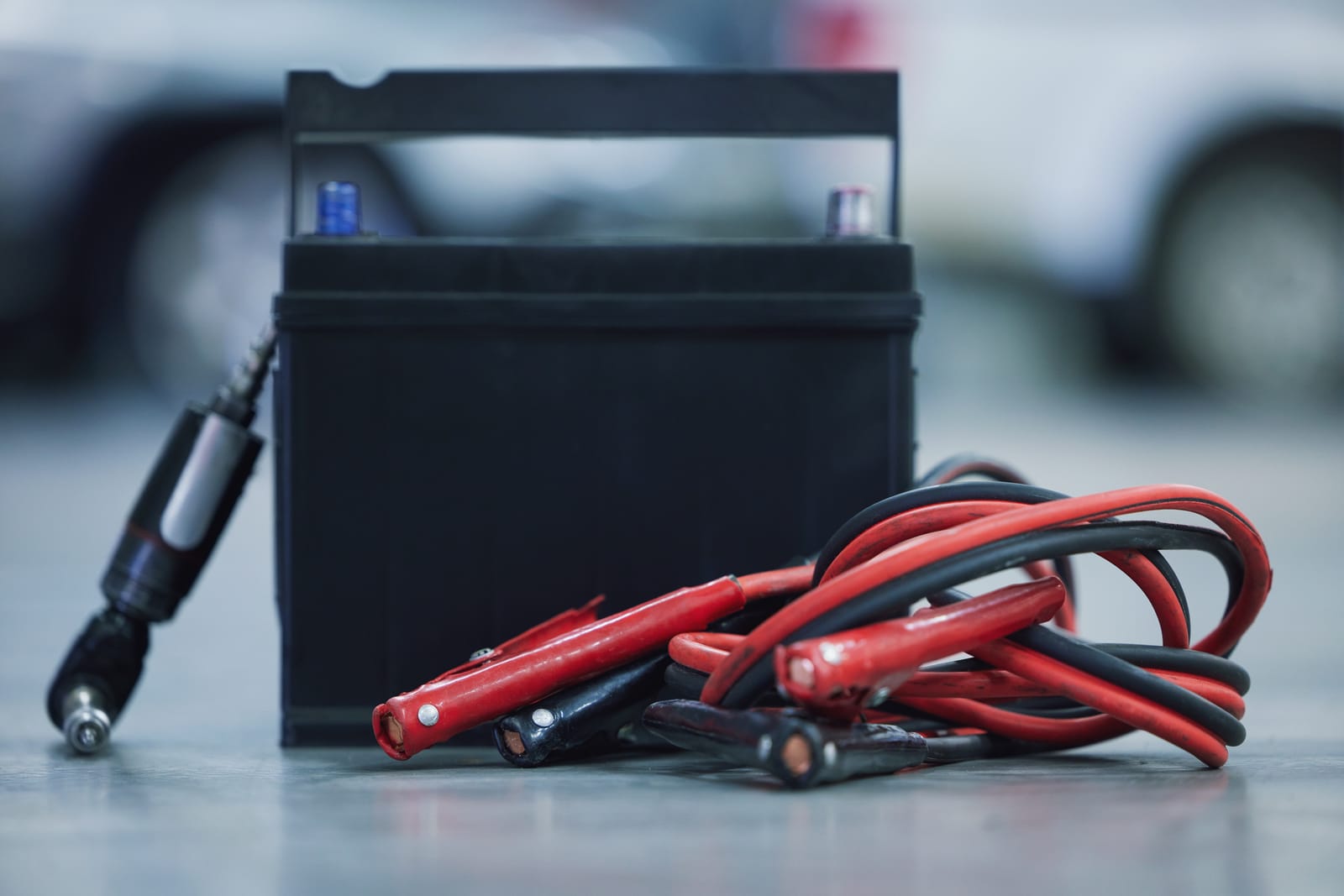
Electric-start mowers and most battery platforms don't like a cold garage. Take the battery out and store it somewhere above freezing, at roughly half to full charge rather than flat. A lead-acid battery left flat through a cold winter is usually a dead battery by spring. Top it up every couple of months.
8. Where it sits
Dry matters more than warm. A shed is fine. A corner of the garage is fine. Get it off bare concrete if you can manage it, since concrete wicks moisture up into whatever sits on it. A pallet or a scrap of plywood is enough.
If you cover it, cover it with something breathable. A plastic tarp traps condensation against the deck, which is the opposite of the point.
Where used parts work here
Blades, air filters and spark plugs are wear items, so buy those new. They're cheap, and a used blade is somebody else's unknown metal fatigue.
Where used makes real sense on a mower is everything that isn't consumable: wheels and height adjusters, grass bags, side-discharge chutes, recoil starters, deck spindles, and the plastic covers that break first and cost the most from a dealer. Those are exactly the parts that get pulled off a scrapped mower with plenty of life left, and exactly what the Parts Exchange is searched by. Pick your make and model and see what fits.
What not to buy used, ever: anything on the fuel side you can't see inside, and any part of the blade brake or operator-presence system. That handle bar that stops the blade when you let go is a safety system.
That includes carburetors. A new aftermarket one is $15 to $25 and you know what you are getting. A used one is somebody else's varnish, and you will not know until it is bolted on.
When to call somebody
- The engine has been run with no oil in it
- There's a knock, or the crankshaft is visibly bent, meaning the blade wobbles in a circle rather than spinning flat. That is usually the end of that mower
- Fuel is leaking anywhere
- It's under warranty and self-service would void it
FAQ
Do I really need to winterize a lawn mower? If it's going to sit more than about two months, yes, and the fuel step is the one that matters. Everything else can be done in spring. Fuel can't be undone.
Do I have to clean the carburetor every year? No. If you put the mower away dry, or stabilized and ran it through, a look in the bowl is usually enough. Clean it when the mower sat on untreated fuel, when it ran rough at the end of last season, or when what comes out of the bowl isn't clean fuel.
Should I drain the gas or use stabilizer? Either works. Draining is more certain and free. Stabilizer is easier and means you can pull the mower out for a warm-spell mow. Just don't do neither.
Can I leave the mower outside over winter? You can, and it will cost you a deck. If outside is the only option, get it off the ground and under something breathable.
How often should I sharpen the blade? Roughly every 20 to 25 hours of mowing, which for most lawns is once or twice a season. Torn, ragged grass tips that go brown a day after mowing mean it's overdue.
What oil does my mower take? Check the manual first. Absent that, SAE 30 for warm-climate walk-behinds and 10W-30 for most everything else, but the manual wins over any guide including this one.